
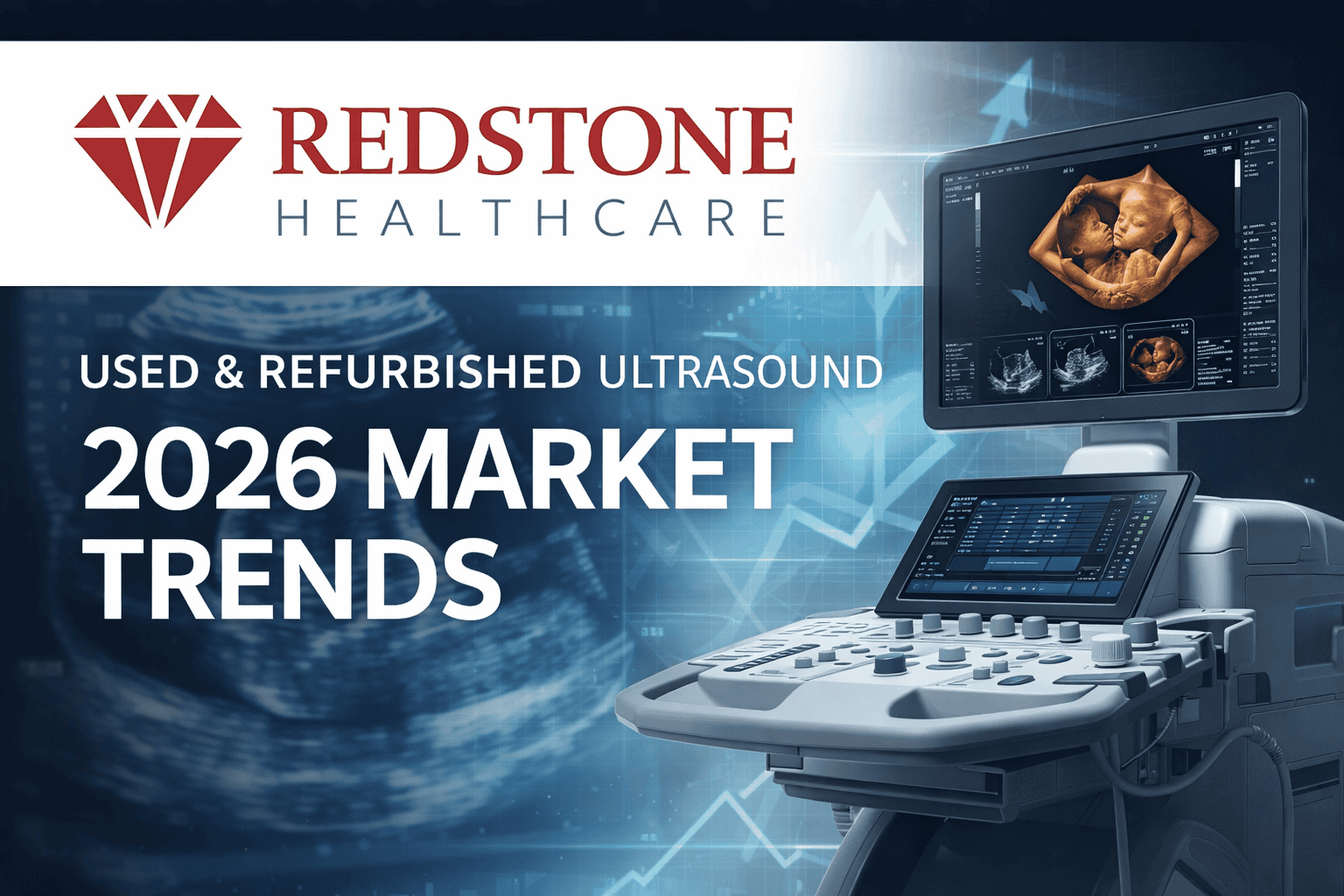
As healthcare providers continue to balance rising costs with increasing demand for diagnostic imaging, the used and refurbished ultrasound market is experiencing sustained growth in 2026. Once viewed as a secondary option, refurbished ultrasound systems are now widely accepted as a strategic, value-driven solution for hospitals, clinics, and outpatient facilities.
Driven by technological advancements, improved refurbishment standards, and growing sustainability priorities, the refurbished ultrasound market is evolving rapidly. Below, we explore the most important trends shaping the industry as of February 2026, and what they mean for healthcare providers considering refurbished imaging equipment.
Continued Growth in the Refurbished Ultrasound Market
The global market for refurbished ultrasound systems continues to expand steadily. Healthcare organizations are increasingly leveraging refurbished equipment to:
-
Expand imaging capacity without major capital investment
-
Equip outpatient and ambulatory facilities cost-effectively
-
Support point-of-care and mobile diagnostic programs
-
Replace aging systems without sacrificing performance
This growth reflects a broader shift in procurement strategy. Instead of viewing refurbished equipment as a short-term workaround, providers now see it as a long-term asset strategy that supports both clinical and financial goals.
Advanced Imaging Technology Becomes More Accessible
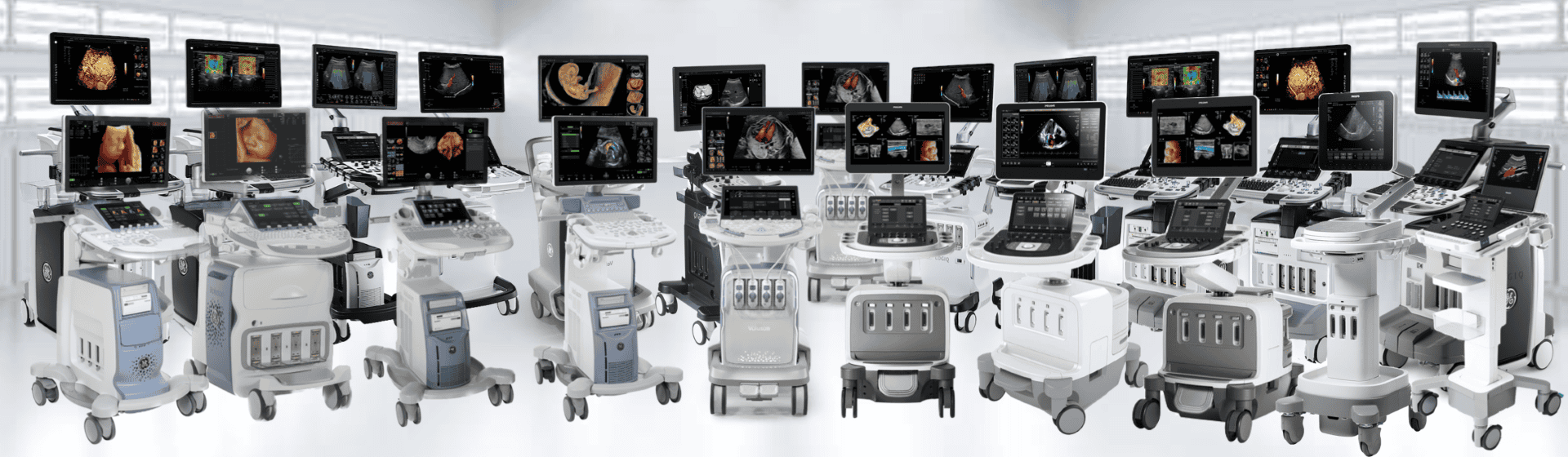
One of the most notable changes in 2026 is the level of technology now available in refurbished ultrasound systems. Many refurbished platforms support features that were once reserved for new, premium systems, including:
-
3D and 4D ultrasound imaging
-
Advanced Doppler and vascular imaging capabilities
-
Cardiac and OB/GYN specialty applications
-
AI-assisted workflow and image optimization tools on select models
Modern refurbishment programs frequently include software upgrades, system recalibration, and probe validation—allowing older platforms to meet today’s clinical expectations.
For many providers, this means access to high-end functionality at a significantly reduced cost compared to purchasing new equipment.
Cost Efficiency Remains a Core Advantage in the Ultrasound Market
Cost savings continue to be one of the primary drivers behind the adoption of refurbished ultrasound machines. Refurbished systems typically offer substantial savings over new equipment, freeing up capital for other operational or clinical investments.
However, purchasing behavior has become more sophisticated. In 2026, buyers are no longer focused solely on upfront price. Instead, they are evaluating:
-
Total cost of ownership
-
Equipment condition and testing protocols
-
Warranty coverage and service availability
-
Vendor credibility and transparency
The focus has shifted from “lowest cost” to best overall value.
Sustainability and the Circular Economy Gain Momentum
Sustainability is playing an increasingly important role in medical equipment procurement decisions. Refurbished ultrasound systems support environmental goals by extending the usable life of imaging equipment and reducing electronic waste.
Many healthcare systems now factor sustainability into purchasing policies, particularly as ESG initiatives gain traction. Refurbished equipment aligns naturally with these goals while still delivering dependable clinical performance.
OEM-backed refurbishment programs and certified independent refurbishers are helping reinforce trust in the refurbished equipment lifecycle.
Strong Demand for Portable and Point-of-Care Ultrasound
Portable and point-of-care ultrasound systems continue to be among the fastest-growing segments in the refurbished market. These systems are widely used in:
-
Emergency departments and urgent care centers
-
Ambulatory surgery centers
-
Specialty clinics and physician offices
-
Mobile healthcare and outreach programs
Their flexibility, smaller footprint, and affordability make refurbished portable systems especially attractive to facilities expanding decentralized care models.
At the same time, demand remains strong for refurbished ultrasound systems used in cardiology, OB/GYN, and vascular imaging, as higher-end platforms increasingly enter the secondary market.
Ultrasound Market Rising Standar
ds for Refurbishment and Quality Assurance
As the refurbished ultrasound market matures, expectations around quality and reliability have risen. Healthcare providers are prioritizing vendors that offer:
-
Multi-point inspection and testing processes
-
Software verification and calibration
-
Comprehensive probe testing
-
Clear refurbishment documentation
-
Robust warranties and post-sale technical support
This shift reflects a broader trend toward professionalization within the refurbished medical imaging industry. Buyers want confidence that refurbished systems will deliver consistent performance over time.
What This Means for Healthcare Providers in 2026
As of February 2026, the used and refurbished ultrasound market is stronger, more transparent, and more technologically capable than ever before. Providers evaluating refurbished systems can expect:
-
Access to advanced imaging features
-
Meaningful cost savings
-
Improved reliability and service support
-
Alignment with sustainability initiatives
When sourced from experienced and reputable partners, refurbished ultrasound systems can deliver exceptional value without compromising clinical quality.
Redstone Healthcare’s Perspective
At Redstone Healthcare, we closely track market developments in refurbished medical imaging to help providers make informed, confident purchasing decisions. By understanding current technology trends, refurbishment standards, and buyer expectations, healthcare organizations can leverage refurbished ultrasound systems as a strategic part of their imaging portfolio.
Contact Us for More Information:












Leave A Comment